12 min read
The Morning Star
In the ruins after the earthquakes, a little girl reaches toward the last star of night and asks when she'll see the other side. A short story.
“I am the root and the offspring of David, and the bright and morning star.”
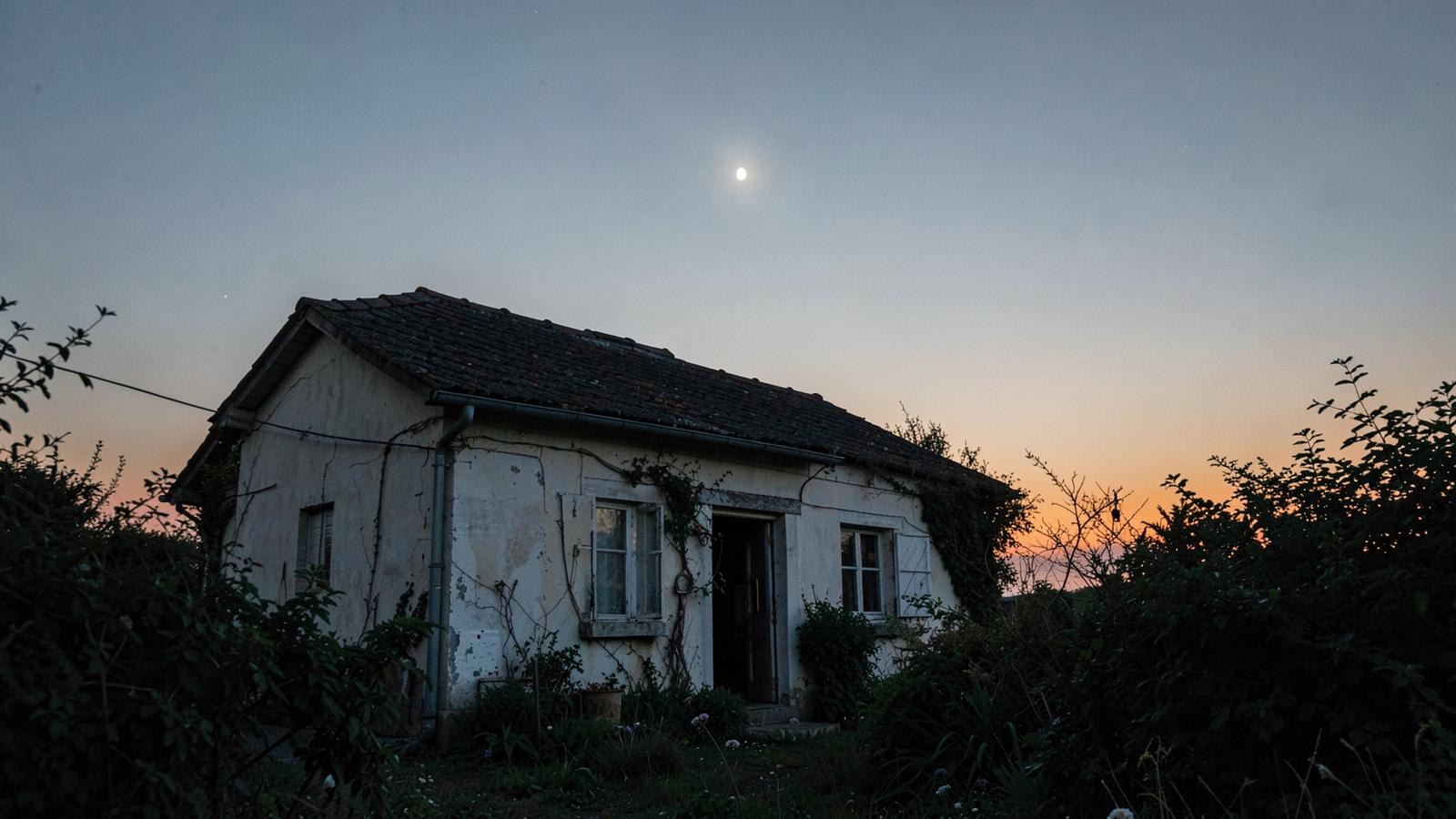
Jamie turned again in her sleep, and this time decided she was not sleepy, and opened her eyes, looking up into the stars. Once she had slept in her own bed, deep under the downy comforters with all her favorite things nestled on shelves nearby. But that had been so long ago now that she could barely remember it. Now she slept on the lee side of a wall of what had once been their home. The earthquakes had made the house so unsafe they had to sleep outside to be sure they were safe. In turning she gazed up into the heavens, and indeed, there it was — the Morning Star. She reached out her hand as if to touch it.
Heather, feeling her daughter moving, woke from her shallow sleep. She no longer slept soundly; she always slept with half an ear and half an eye open, to be sure they were all safe. It had probably been two years since she had slept well. Two years since she had had a real bed, two since she could sleep knowing her family was safe. She could see Jamie's outstretched arm, even in the darkness. “What are you doing?” Heather asked, in a low voice so as not to awaken the others, creeping a bit closer as she did.
“I'm touching the Morning Star,” Jamie answered. “I was asking the Morning Star when we'll see the other side.” “Touching it?” “Not really, Mom — more like talking to it.” “Talking to it?” Heather still wasn't truly awake, but she wanted Jamie to know she was there. “Yeah.”
Jamie paused, and Heather dozed, and more softly Jamie said, “Yeah — you know that old lady who stays under that porch down the street? She says the Morning Star is where we get hope from. She says at night the Morning Star gives us light that proves promises are true, and that in the daytime the rainbow is where the promises come from.”
Heather, still trying to both listen and sleep, said, “Promises? What promises?” “That there's another side. No — she says, the other side. The side we can't see. She said that's where Max is, and Daddy. I was just asking the Morning Star when we could see them.” At this Heather quietly sat up. “Honey, we won't ever see Max and Daddy again. They are gone.”
“I know, Mom. That's what the lady says — that they are gone, but they aren't far away, just on the other side. The side we can't see. She says there is so much we can't see. She said the Morning Star made everything, and is taking care of everything, and someday we will see everything — and that the rainbow is the promise.”
Heather reached out and pulled Jamie into her lap. “Promise?” “Yeah — that we won't all be destroyed, that we will find the other side. Don't you remember, Daddy used to read it to us before he left: In my house are many houses; I go to prepare a place for you, so that I can bring you to me, and my house. That the man from the other side made a place for us — and that man, the old lady says, is the Morning Star.” Heather gently wiped the tears from her face, hoping Jamie wouldn't find she was crying.
“She says He sees everything we are doing, and is helping us, and loving us. She says that love is the proof that the other side is real — that nothing on this side can explain love. She said love doesn't grow like a plant, or come from the water, or float on the wind; that we can't dig it out of the ground, and it finds us wherever we are, and helps us, and takes care of us — sometimes more than the people and things on this side.”
“Yeah,” Heather whispered next to Jamie's ear, “that is what your dad believed too. He would be sitting and kinda crying, holding that book he read, and he'd say, sort of wondering-like, ‘All the promises are true.'”
Jamie cuddled closer. “Yeah, I know they are true too — they speak to me. Remember, Daddy told them to us, and sometimes when I'm walking looking for straw, or digging through rubble for wood pieces or cloth that we can use, I can hear the words. They just kinda bubble up in my mind.” “Like what, honey?” Heather whispered.
“Like: It's true, I am always with you. And: I will give you peace — not peace like in the world, but my peace. That I will never leave you or forsake you. That I will bring you home to myself. And I will always love you. And believe in me, because in me you will never die. The old lady says that means we will be able to see the other side when we get new eyes that don't ever die — that we will be able to see everything then, because the Morning Star will give us eyes to see with. That Daddy and Max have these new eyes, and are still with us, and… love… us.”
Heather could tell from her weight that Jamie had fallen back asleep, but she still sat and held her and pondered, till the Morning Star faded and the morning light started to rise. With it came rain, and the whole little band of a family woke and tried to pull the covers over themselves against it.
Gil huddled in under the cover with Heather, still holding Jamie. “It's really raining hard,” Heather said, “and from the sound of the thunder it is only going to get worse. Do you think we should try getting under that little part of the roof covering the old dining room?” “No,” Gil answered, “I don't think the risk here is as bad as the risk there. It isn't that cold, and the wall will protect us somewhat from the wind and lightning. But in this wind, another part of the roof might fall in. I haven't gotten to the roof yet — I'm still trying to break enough bricks and blocks apart to build that one room. I've managed to salvage enough roofing to cover it once I get it rebuilt. Hopefully before it gets colder.”
She says the Morning Star gives us light that proves promises are true.
“How will we heat it?” Heather asked. “I'm leaving a sort of hole in the ceiling, and I've salvaged enough old exhaust pipe from the furnace to put a smoke vent up. We'll keep using that old charcoal grill we keep hidden under the stack of broken lumber with all the nails in it. The main thing is, I still have to stay here all the time to make sure the roving dogs — both human and animal — don't come digging through everything we've sorted. I try to hide the piles of wood and bricks I've cleaned of mortar and rusty nails; they are so valuable. The hardest part is trying to look like I'm doing nothing while I do such hard work as scraping bricks and pulling nails. I'm sorry I can't be more use to you finding food.”
“No! You are doing the most important thing,” Heather responded. “You are building us a place to live and have some safety. I am just thankful for the weeds and the neighbors who share. Who would believe that potatoes would grow after the devastation we have had.”
“Have you been crying again?” Gil asked, seeing the tear tracks on her face in the glow under the oiled cloth. “Yes. Jamie was talking about that old lady, and her stuff about the Morning Star loving us, and Max and Josh. I miss them so much. Sometimes I just can't bear it.”
Gil put his arm around Heather's shoulders as she cried. “I know. I miss Rachel so much sometimes I think I would just die from the sorrow. But that isn't what happens. Instead, when I think about her, the words to that song she would sing come to me, and somehow I feel better. I can't explain it.” “Which song?” Heather asked.
“You know — she said it was her favorite, and she was always singing it. Something about singing because you're happy, because you're free, because His eye is on the sparrow and He is watching over us.” And softly, under the rain, he said the words: “Why should I feel discouraged, why should the shadows come, why should my heart grow weary and long for heaven and home — if Jesus is my portion, my constant friend is He. His eye is on the sparrow, and I know He watches me. I sing because I'm happy, I sing because I'm free — for His eye is on the sparrow, and I know He watches me.”
“It just about killed me. I so wanted to die when I lost her. After the earthquakes, and the rioting and chaos, we had survived everything — me and her and Katlyn. But then the first winter came, and she got that flu and pneumonia, and like so many others, just didn't make it. Just before she died she put her hand on Katlyn, and then on me, and said: ‘I'll see you. It's the promise.'”
“What did she mean — ‘the promise'?” Heather asked. “She said it's that name — you know the name we dare not speak. The Morning Star. That in me you have life, life eternal. It was in the books. Do you remember when the armies came through? They didn't touch us. They took the ones who had the books, and then burned the books. They pulled down what was left of the houses and took all the guns and all the good knives. The government still has electricity and technology, enough to listen to us and spy on us — but we are left to die with the dogs.”
“Listen.” Heather sat upright. “The rain has stopped. I'm going to get some fresh water from the rain barrel and see if I can find a few sprouts of dandelion or violets — after the rain we may have new sprouts. I am so glad I spilled those old buckwheat sprouts back in the day; they keep giving and giving to us. And pretty lucky I spilled them behind the house, too!” She pulled the makeshift tarpaulin off to let in the fresh morning air. “I'll stay here with Jamie and Katlyn and wait for you,” Gil said, shaking out the tarp and hanging it on the backside of the wall, weighting it down with rocks.
Heather went and started scanning the old lawn for the new weeds — the small salad that would be breakfast. In the rain-soaked venture she found success, and with it started to hum, as she had no immediate problems this rainy morning.
Jamie and Katlyn started stirring as the sun hit them squarely in the face. They were both as brown as coffee beans from the constant exposure — Katlyn more so from freckles than from pigment. Gil said to the girls, “Let's surprise Heather. Let's set up a little table space. Katlyn, go find that sheet — it doesn't matter if it's wet — the one with the flowers on it. Jamie, you bring the two good plates and the plastic glasses. I know it's only two plates, but we can share! Let's see if we can find some happiness this morning, even if it is a little drippy!”
When Heather returned, there was a small dining room waiting for her. She grinned at how the old sheet spread over two concrete blocks created the illusion of a dining table, with the two lonely plates and four glasses, and the lonely dandelion bloom in the old jar — while the three sat formally around the grand table as if they were at high tea. They had filled the glasses with fresh rainwater and were sitting about as if they were royalty.
As she sat down on the ground next to the “table,” she said, “Isn't it strange, that no matter how dismal things become, there are always constant graces to encourage and uplift us — the pretty flowers, even on the wet cloth, and the wonderful freshness of the air after the rain, and the oh-so-soft breeze before the sun gets high in the sky.” She held her hands up as if to feel the breeze.
“And the promise that we aren't alone!” piped Jamie, jumping up and down in her place. “What?” asked Heather, confused at the sudden change. “The promise,” piped Jamie. “See — look! Have you ever seen such a rainbow?”